Press Play on Peace: Why Gamers Have Been Sitting on the Best Wellness Playlist All Along
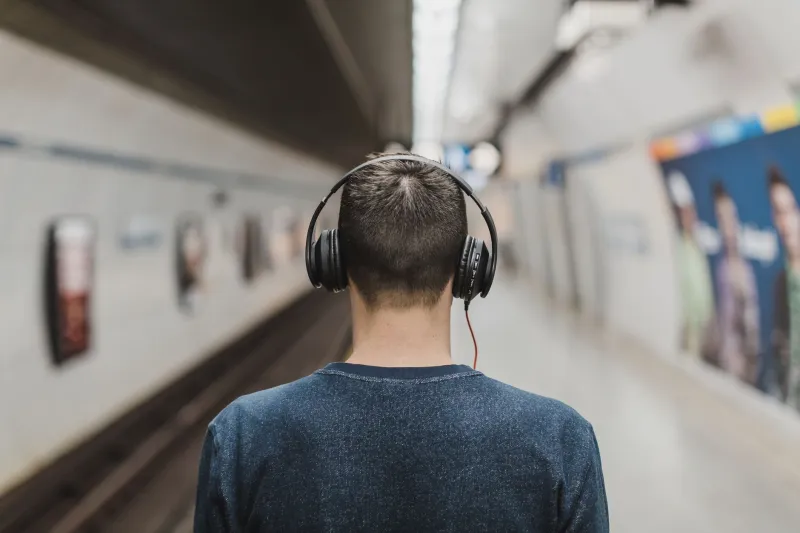
Somewhere on the L train in Chicago, a woman named Dana is closing her eyes during the morning crush. She's not meditating, exactly. She's not listening to a podcast or a true-crime deep dive. She's got the Final Fantasy XIV: Endwalker soundtrack pumping through her earbuds, and by the time she hits her stop, she says she actually feels okay.
"I used to get off the subway already exhausted," she told us. "Now I get off ready to actually function."
Dana isn't alone, and she's not doing something weird. Across the country, video game music has quietly migrated from the TV speakers in your living room to the headphones of commuters, remote workers, college students cramming for exams, and yes — therapy waiting rooms. Gaming soundtracks have become one of the most underrated wellness tools of the 2020s, and the people who've been in on it since the beginning? Gamers. Obviously.
Why Game Music Hits Different
Here's the thing about video game music that sets it apart from, say, a lo-fi hip-hop stream or a Spotify mood playlist: it was engineered from the ground up to keep you in a specific mental state for hours at a time without ever demanding your attention.
Composers working in games face a unique challenge. The music has to loop seamlessly. It can't be so catchy that it pulls you out of the experience, but it has to be emotionally resonant enough to make you feel what the game wants you to feel. It has to sustain focus without becoming noise. That's an incredibly specific design brief — and it turns out it maps almost perfectly onto what humans need when they're trying to concentrate, decompress, or just survive a 45-minute commute.
Austin Wintory, the composer behind the Journey soundtrack (which became the first video game score nominated for a Grammy), has talked publicly about how the medium demands emotional precision in a way few other formats do. You're not scoring a two-hour film. You're scoring a space someone might inhabit for 20, 40, or 80 hours. The music has to breathe with the player.
That breathing quality is exactly what researchers point to when they explain why game music works so well for anxiety management. It creates what psychologists sometimes call "structured ambient sound" — audio that provides just enough stimulation to keep the brain engaged without triggering the stress response that comes from silence or, conversely, from chaotic or lyrically dense music.
From the Controller to the Couch (The Therapy Couch)
Therapists have started paying attention. Not universally, and not as some kind of formal clinical protocol — but anecdotally, practitioners who work with anxious clients, particularly younger ones, have been noting that gaming soundtracks are showing up in their clients' self-care toolkits.
The logic makes sense when you think about it. A lot of therapeutic work around anxiety involves helping clients find anchors — sensory or emotional reference points that signal safety and calm. For people who grew up gaming, the music from beloved titles carries enormous associative weight. The ambient score from Stardew Valley doesn't just sound peaceful. It feels like a place where nothing bad happens and your only job is to water your crops. That's not nothing when your nervous system is in overdrive.
This is sometimes called "nostalgia therapy" in casual psychology circles, though the mechanism is less about nostalgia specifically and more about conditioned emotional responses. Your brain learned, over hundreds of hours of gameplay, that a certain kind of music means you're safe, you're in control, and you're doing something enjoyable. Cue that music in a stressful environment, and you're essentially borrowing that feeling.
The Commute Playlist Revolution
Look at the numbers on Spotify and YouTube and the trend is hard to miss. Channels dedicated to game soundtracks — "Cozy Gaming Music," "Study with Zelda," "Final Fantasy for Focus" — rack up millions of views and hours of watch time. The Animal Crossing: New Horizons hourly music compilations became a genuine phenomenon during the pandemic, with non-gamers discovering them and using them as background audio for work-from-home days.
Reddit communities like r/gaming and r/productivity are full of threads where people swap recommendations for the best game soundtracks for different moods and tasks. Hollow Knight for deep focus work. Ori and the Blind Forest for winding down. Persona 5 for when you need energy without lyrics pulling your brain in two directions. Shadow of the Colossus for when you want to feel epic about doing your taxes.
The community has basically built its own informal wellness curriculum around this stuff, years before wellness influencers caught on.
Composers Are Noticing the Shift
The people making this music are aware that their work is living a double life. Yasunori Mitsuda, the composer behind Chrono Trigger and Xenogears — two soundtracks that have been streaming staples for focus playlists for years — has spoken in interviews about the responsibility that comes with writing music that people will spend serious time with. There's an intentionality to that work that differs from writing a pop song meant to be heard and moved past.
Indie composers, too, are increasingly aware that their scores might end up on someone's commute playlist or study session. Lena Raine, who composed the Celeste soundtrack — a game literally about mental health — said in various interviews that the music was written to accompany struggle and perseverance. Unsurprisingly, it's become a go-to for people dealing with anxiety, people pushing through hard workouts, and students grinding through finals week.
The music was made to help someone climb a mountain. Turns out it helps with a lot of different mountains.
Building Your Own Game Music Wellness Toolkit
If you're not already doing this, here's your entry point. Start with the mood you're trying to create:
For focus and deep work: Hollow Knight, Hades (ambient tracks), Disco Elysium, NieR: Automata
For commuting and transition: Final Fantasy XIV, Journey, Ori and the Blind Forest
For winding down: Stardew Valley, Animal Crossing, Abzû, Firewatch
For low-key energy: Persona 5, Jet Set Radio, Celeste
YouTube is a great starting point — search the game title plus "soundtrack" or "OST" and you'll find full albums, often uploaded officially. Spotify has gotten significantly better about licensing game music, and a lot of composers have their own channels and Bandcamp pages if you want to support them directly.
The Gamers Knew First
Here's the part that's a little satisfying if you've been a gamer for a while: this isn't a discovery. It's a confirmation. Anyone who ever put on a headset and lost themselves in a 60-hour RPG already knew that the music was doing something. It was always doing something.
The rest of the world is just catching up.
So next time someone gives you a look for listening to a Zelda orchestra arrangement on the subway, you can tell them it's basically science. And then you can go back to your commute, close your eyes, and let whatever world the music is from carry you somewhere better than wherever you're physically sitting.
Level up your commute. Your brain will thank you.