Press Pause on Stress: How Gaming Quietly Became One of the Best Mental Health Tools Around
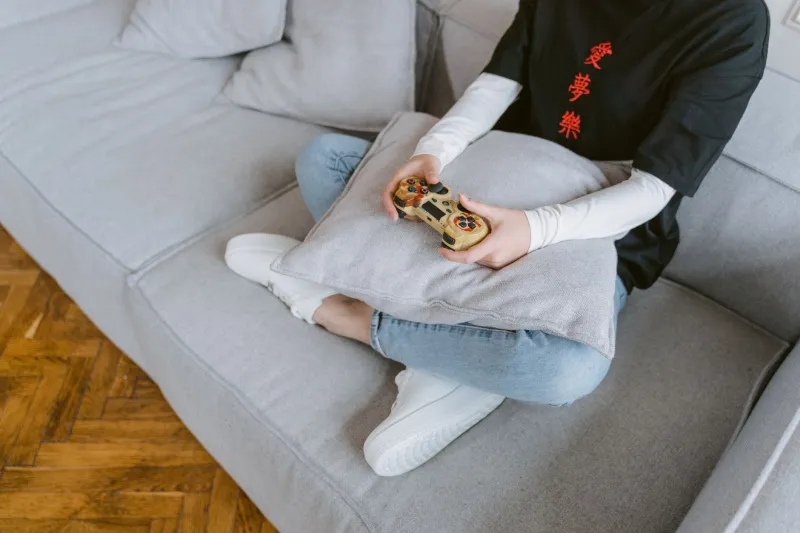
You know that feeling. You've just survived a nine-hour workday, your inbox is still full, your commute was a nightmare, and your brain is basically a browser with 47 tabs open. You sit down, pick up your controller, and somewhere between loading screen and first checkpoint — something shifts. The noise fades. You're just... in it.
That's not escapism. That's neuroscience.
For years, gaming got lumped in with other so-called "bad habits" — things you do instead of dealing with your problems. But researchers, therapists, and mental health professionals are increasingly pushing back on that narrative. Turns out, immersive gameplay might be doing something genuinely useful for your brain, and it's time we stop feeling guilty about it.
What's Actually Happening in Your Head
The concept of "flow" — a state of deep, effortless focus first described by psychologist Mihaly Csikszentmihalyi — is central to understanding why games feel so mentally restorative. Flow happens when a task is challenging enough to hold your full attention but not so hard that it triggers panic. Games, almost by design, are built to hit that sweet spot.
Dr. Rachel Kowert, a research psychologist who has spent years studying the intersection of gaming and mental health, has pointed out that video games are uniquely effective at generating flow states because they provide immediate feedback, clear goals, and a sense of progressive mastery. "Games are incredibly well-designed environments for psychological engagement," she's noted in various interviews. "They give you control, agency, and a feedback loop that real life often doesn't."
And flow isn't just a pleasant feeling — it has measurable physiological effects. Studies have found that sustained flow states are associated with reduced cortisol, the hormone most closely tied to stress responses. In plain English: playing the right game at the right intensity can literally lower your stress hormones. That's not nothing.
"I Stopped Doom-Scrolling and Started Playing Stardew"
Ask gamers across the US how they use games to manage anxiety, and you'll hear the same themes over and over — even if the specific titles vary wildly.
Marcos, a 34-year-old IT project manager from Austin, Texas, says he turned to puzzle games during a particularly rough stretch at work two years ago. "I started playing Tetris Effect almost every night before bed. There's something about matching shapes and hearing that music that just... resets me. My therapist actually thought it was a great idea once I explained it to her."
That tracks with research out of the University of Oxford, which found that playing Tetris after a stressful event could interrupt the brain's tendency to replay and ruminate on negative experiences — essentially short-circuiting the anxiety feedback loop before it spiraled.
Then there's the exploration crowd. Games like Abzu, Journey, and No Man's Sky have built loyal followings among players who describe them less like games and more like interactive meditation. "I put on Journey when I'm overwhelmed," says Priya, a 29-year-old nurse from Chicago. "There's no combat, no timer, no pressure. You just move through this beautiful world. It's the closest thing I have to a mental reset button."
Rhythm games occupy their own interesting lane. Titles like Beat Saber and Crypt of the NecroDancer require a kind of full-body, full-brain engagement that leaves almost no mental bandwidth for anxious thoughts. "When I'm playing Beat Saber, I genuinely cannot think about anything else," says Derek, a 41-year-old from Seattle. "It's the only time my brain fully shuts up."
Therapists Are Starting to Listen
The mental health community isn't universally on board — there are still valid conversations to be had about gaming addiction and avoidance behaviors. But a growing number of therapists are incorporating gaming conversations into their practice, and some are actively recommending specific genres as complementary coping tools.
Licensed therapist and gamer Kelli Dunlap, who has spoken publicly about the mental health applications of gaming, has argued that the stigma around gaming as a coping mechanism often prevents people from recognizing a tool that's genuinely working for them. The problem, she suggests, isn't gaming itself — it's the shame spiral that follows. People feel better after an hour of Animal Crossing, then feel guilty about it, which generates its own stress. It's a counterproductive cycle.
The key distinction mental health professionals tend to draw is between gaming as active restoration versus gaming as pure avoidance. Using a game to decompress and return to your life with more capacity? That's healthy. Using games to permanently dodge every difficult emotion or responsibility? That's worth examining. But most casual gamers already know the difference — they live it.
Genre Matters More Than You Think
Not all games hit the same mental health notes, and it's worth understanding which genres tend to work best for different kinds of stress.
Puzzle games (think Portal, The Witness, Monument Valley) are strong candidates when your stress is tied to feeling out of control. They give you a problem with a solvable answer — a rare commodity in adult life — and the satisfaction of resolution triggers genuine dopamine release.
Exploration and open-world titles (Breath of the Wild, Firewatch, Outer Wilds) tend to work well when your stress is more diffuse — that low-grade anxiety that doesn't have a specific source. The freedom to wander without immediate consequence can be genuinely grounding.
Rhythm games are particularly effective for people whose anxiety manifests physically — racing heart, shallow breathing, restless energy. The rhythmic, repetitive engagement tends to regulate breathing patterns and redirect nervous system arousal into something productive.
Cozy games (Stardew Valley, Unpacking, Spiritfarer) have exploded in popularity partly because they offer warmth, gentleness, and low stakes in a world that often feels like the opposite. There's a reason the cozy gaming community has grown into one of the most supportive corners of gaming culture.
Stop Apologizing for Your Controller
Here's the takeaway: if you've been gaming to manage stress and feeling vaguely guilty about it, science is increasingly telling you to relax. Not every coping mechanism needs to involve a yoga mat or a guided breathing app. For a lot of people — maybe most people reading this — a well-chosen game in a quiet room after a hard day is doing exactly what it's supposed to do.
The mental health conversation around gaming is finally growing up. Researchers are asking better questions, therapists are listening more carefully, and gamers themselves are getting more comfortable articulating why this hobby matters to them beyond entertainment.
So the next time someone raises an eyebrow at your post-work gaming session, you've got receipts. Flow states. Cortisol reduction. Psychological restoration. Tell them your controller is basically a wellness device.
They'll catch up eventually.