Brain Gains: The Real-World Thinking Skills You've Been Building Every Time You Game
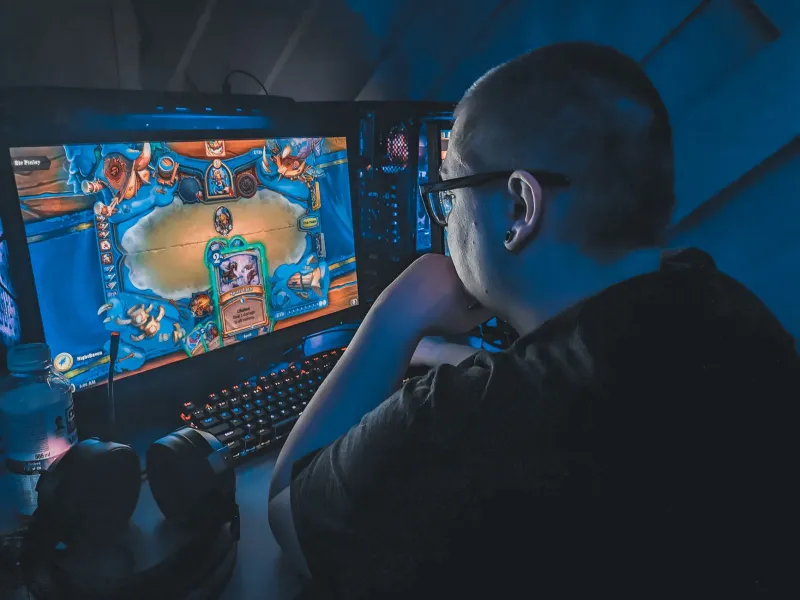
Let's be honest: nobody's mom ever looked at a kid grinding through Portal 2 at midnight and thought, "That's future leadership potential right there." But here's the thing — she might have been wrong to dismiss it.
Gaming has a PR problem when it comes to cognitive credibility. For decades, it's been filed under "distraction" in the cultural conversation, lumped in with junk food and doom-scrolling as something to tolerate rather than celebrate. But a growing body of research, plus the lived experiences of professionals across industries, is starting to tell a very different story. The skills gamers build — quietly, organically, often without even realizing it — are exactly the kind of flexible, adaptive thinking that the modern workplace desperately needs.
And school? School is still mostly teaching you to memorize the formula.
The Problem With How We Learn Problem-Solving
Traditional education is great at delivering structured problems with known solutions. You learn the quadratic formula. You apply it. You get the answer. There's a ceiling to that kind of thinking, and most working adults hit it pretty fast once they leave the classroom.
Real life — and real careers — rarely hand you a clean problem with a clear solution path. They hand you a mess. Incomplete information. Competing priorities. Constraints you didn't see coming. And they expect you to figure it out anyway.
This is exactly the environment that games simulate, often without players even noticing.
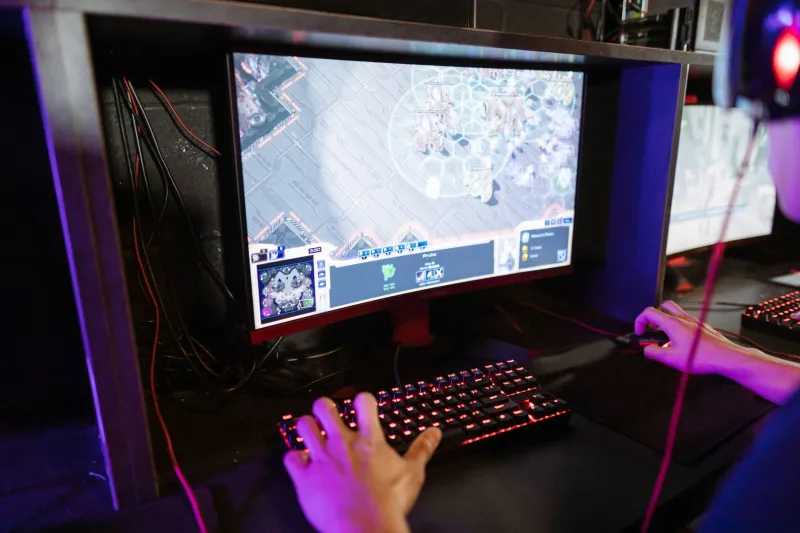
Take a game like Civilization VI. On the surface, it's a strategy game about building empires. But what you're actually doing is managing resource scarcity, forecasting long-term consequences, balancing short-term needs against big-picture goals, and adapting your entire strategy when an unexpected variable — say, a neighboring civilization going full warmonger — blows up your plan. That's supply chain thinking. That's risk management. That's the stuff MBA programs charge $80,000 to teach.
Lateral Thinking: Gaming's Secret Weapon
One of the most underrated cognitive gifts gaming gives players is lateral thinking — the ability to approach a problem from an unexpected angle when the direct route isn't working.
Puzzle games are the obvious training ground here. The Witness, The Talos Principle, Return of the Obra Dinn — these games are essentially lateral thinking boot camps. They give you a problem, withhold the rulebook, and trust you to figure out the logic on your own. There's no teacher hinting you're "getting warmer." You observe, hypothesize, test, fail, and try again from a different angle.
Jamila Torres, a UX researcher based in Austin, Texas, credits exactly this kind of thinking for her career trajectory. "I played a ton of mystery and puzzle games growing up," she says. "And when I started doing user research, I realized I was approaching it the same way. You're looking for patterns in behavior that people can't always articulate. You have to infer what's really going on from incomplete signals. That felt completely natural to me because I'd been doing it in games for years."
She's not alone. Across fields from software engineering to emergency medicine to financial analysis, professionals are drawing direct lines between their gaming habits and their ability to think flexibly under pressure.
Resource Management Is a Real Skill (And Games Teach It Better Than Anyone)
Ask any project manager what the hardest part of their job is, and "not enough of everything" will come up fast. Time, budget, personnel, attention — resources are always finite, and allocating them wisely is the difference between a project that ships and one that collapses.
Gamers have been practicing this since the first time they had to decide whether to spend their last healing potion before a boss fight or save it for whatever came next.
Games like Stardew Valley, RimWorld, and Oxygen Not Included are essentially resource management simulators wearing fun costumes. Players learn to prioritize under constraint, anticipate future needs, and make peace with imperfect decisions — all without a rubric or a grade to guide them. The feedback loop is immediate and honest: you either thrive or you watch your colony slowly starve.
Marcus Webb, a logistics coordinator for a regional food distributor in Ohio, puts it plainly: "I played strategy games obsessively through high school and college. When I got into logistics, everyone around me was stressed about juggling variables. For me it just felt like... a different kind of game. One where the stakes were real, but the thinking was the same."
Game Designers Know Exactly What They're Doing
This isn't accidental. The best game designers are, in a very real sense, architects of cognitive challenge. They construct systems specifically designed to push players to the edge of their current thinking and then reward the growth that follows.
"Good game design is really about creating a safe space for failure," says one indie developer who's worked on puzzle-platformers for the past decade. "You want players to feel the friction of not knowing, and then the satisfaction of figuring it out. That cycle — struggle, insight, reward — is one of the most powerful learning loops that exists. Schools try to engineer it, but games actually deliver it."
The concept has a name in educational circles: flow state. It's the mental zone where challenge and skill are perfectly balanced, where you're engaged enough to be fully present but not so overwhelmed that you shut down. Great games engineer flow almost by default. Great classrooms try to manufacture it with varying success.
So What Do You Do With This?
If you're a gamer, you probably don't need to be convinced that what you do requires real mental horsepower. But it's worth taking a beat to actually recognize the specific skills you've developed — because most people, including gamers themselves, dramatically undersell them.
Next time you're in a job interview and someone asks how you handle ambiguity, think about how you approach a new game with no tutorial. Next time someone asks about your analytical skills, think about how you diagnose why your strategy isn't working and iterate until it does.
These aren't metaphors. They're transferable skills with real names — systems thinking, iterative problem-solving, adaptive planning, pattern recognition — and gaming is one of the most effective ways humans have ever found to develop them.
School taught you to follow the formula. Gaming taught you what to do when the formula breaks.
That's not nothing. That's actually kind of everything.