Unplug, Scoot Over, and Pass the Controller: Local Co-op Is Having Its Moment

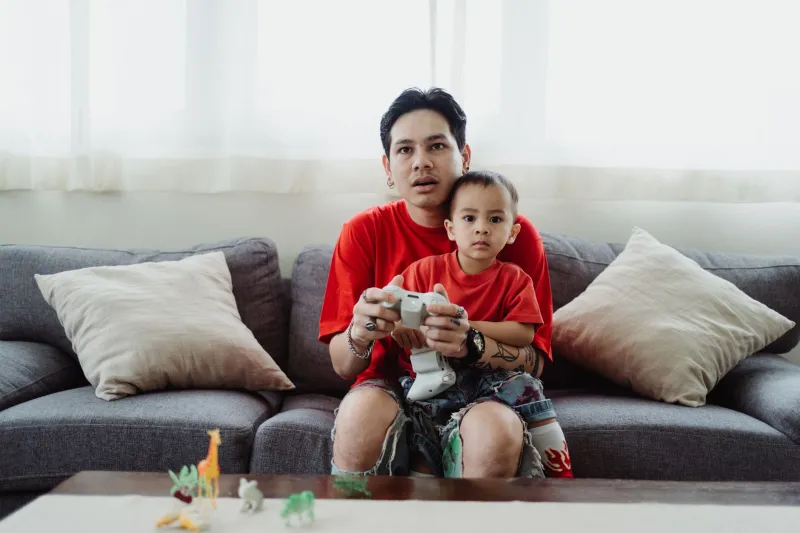
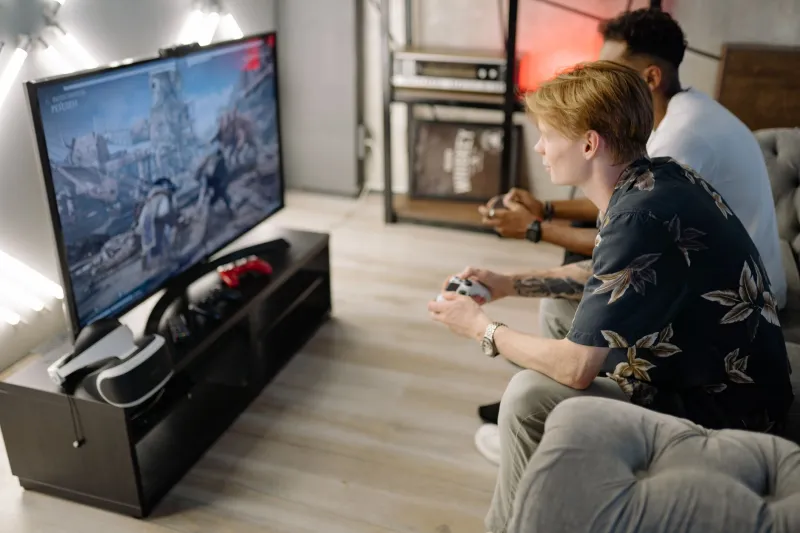
There's a specific kind of chaos that only happens when four people are crammed onto a sectional, controllers in hand, yelling at the same screen. Someone's hogging the good cushion. The pizza box is dangerously close to the coffee table edge. And nobody — absolutely nobody — is staring at their phone.
That's couch co-op. And right now, in 2024, it's making a serious comeback.
For a while there, it felt like local multiplayer was on its way out. Online gaming exploded, headsets replaced hollering across the room, and split-screen started disappearing from major franchises. But something shifted. Players started craving the thing that no matchmaking algorithm can replicate: being in the same room as the people you're playing with.
What's Actually Driving the Revival
Ask around gaming communities and you'll hear the same word over and over: connection. Not Wi-Fi connection — actual human connection.
"There's a fatigue with everything being mediated through a screen and a microphone," says Marcus Webb, a game developer based in Austin who worked on the indie local co-op title Lantern Valley. "People are realizing that gaming can be a social activity in the most literal sense. Like, physically together. It sounds obvious, but it got lost for a while."
The pandemic played a strange role here. When everyone was stuck at home, households that hadn't gamed together in years suddenly rediscovered split-screen. Parents dusted off old consoles. Couples who'd never played games together found themselves deep in Overcooked sessions at midnight. And when the world opened back up, a lot of those habits stuck.
Now, developers are paying attention.
The Games That Are Leading the Charge
The modern local co-op scene isn't just nostalgia bait — it's genuinely innovative. A handful of titles have become cultural touchstones for this movement.
It Takes Two might be the poster child. Hazelight Studios built an entire game around the idea that two people had to play it together, locally or online, no exceptions. It won Game of the Year at The Game Awards in 2021, and it wasn't because of flashy graphics or a massive open world. It won because it made cooperation feel meaningful and, honestly, kind of emotional.
Cuphead brought punishing side-scrolling action back to the couch with gorgeous hand-drawn animation that made suffering look beautiful. Overcooked 2 turned kitchen management into a relationship stress test. Teenage Mutant Ninja Turtles: Shredder's Revenge was practically engineered to make grown adults feel like kids again.
More recently, games like Cocoon, Trine 5, and the endlessly replayable Lovers in a Dangerous Spacetime have kept the momentum going. Nintendo, as always, has been consistent here — the Mario Kart, Smash Bros., and Mario Party franchises remain the backbone of many American family game nights.
"Nintendo never really abandoned local multiplayer," notes Priya Nair, a gaming content creator based in Chicago who runs a family gaming channel. "They kept the faith when everyone else was chasing online. And now everyone else is kind of catching up."
Why It Feels Like a Rebellion
Here's the thing about couch co-op in 2024: choosing it feels like a statement.
Online gaming is default. It's the path of least resistance. You boot up, you queue up, you play with strangers or distant friends without ever having to coordinate schedules or share a couch. It's convenient. It's frictionless.
Local co-op is the opposite of frictionless. You have to actually get people together. You have to share a screen, deal with someone else's volume preferences, negotiate who picks the next game. It requires effort.
And that effort, weirdly, is the point.
"It's intentional," says Webb. "When you choose to play locally with someone, you're choosing to be present with them. That means something different than just hopping into a lobby together."
For families especially, this intentionality has real value. Research on screen time and family dynamics consistently points to shared screen time being fundamentally different from parallel screen time — watching or playing together builds connection in ways that everyone being on their own device simply doesn't.
Tamara Collins, a mom of three in Nashville, puts it plainly: "When my kids are all on their own devices, they're in the same room but basically alone. When we play Mario Kart together, they're trash-talking each other and laughing and actually interacting. It's night and day."
The Developers Who Believe in It
Building a great local co-op experience isn't easy. It requires designing for shared physical space, which introduces all sorts of constraints that online games don't face. Camera systems, screen real estate, difficulty balancing — all of it gets more complicated when two to four players are sharing one display.
But a growing number of indie developers are treating those constraints as creative challenges rather than limitations.
"Split-screen forces you to be economical with your design," says Webb. "You can't just throw a huge UI at people. Everything has to be readable, clear, and fun from six feet away on a couch. It's actually a really interesting design puzzle."
Publishers are starting to notice the market potential, too. Games with strong local co-op options consistently generate word-of-mouth buzz in ways that purely online titles struggle to match. When a game becomes a household ritual — the thing a family plays every Friday night, or the go-to when friends come over — it develops a kind of cultural stickiness that no amount of marketing can manufacture.
The Vibe That Online Can't Fake
There's a moment that every couch co-op veteran knows. It's when something goes spectacularly wrong — someone falls off a ledge, someone accidentally betrays the team, someone pauses at exactly the wrong second — and the whole room erupts. Not in frustration, but in laughter.
That moment doesn't happen over a headset. It happens in person, with people you can actually see, in a shared space with shared snacks and shared stakes.
Online gaming has given us incredible things: massive communities, competitive ecosystems, friendships that span time zones. Nobody's here to knock it. But it can't replicate the specific, chaotic, irreplaceable energy of four people losing their minds together on a couch.
Couch co-op isn't just a game format. It's a reminder that gaming, at its core, has always been about bringing people together — and that sometimes the most powerful thing a game can do is get you off the internet and into the same room as someone you care about.
So scoot over. Pass the controller. And maybe move the pizza box before someone knocks it over.
You've got a game to start.