16 Bits of Glory: How Tiny Indie Games Are Beating Big Studios at Their Own Game
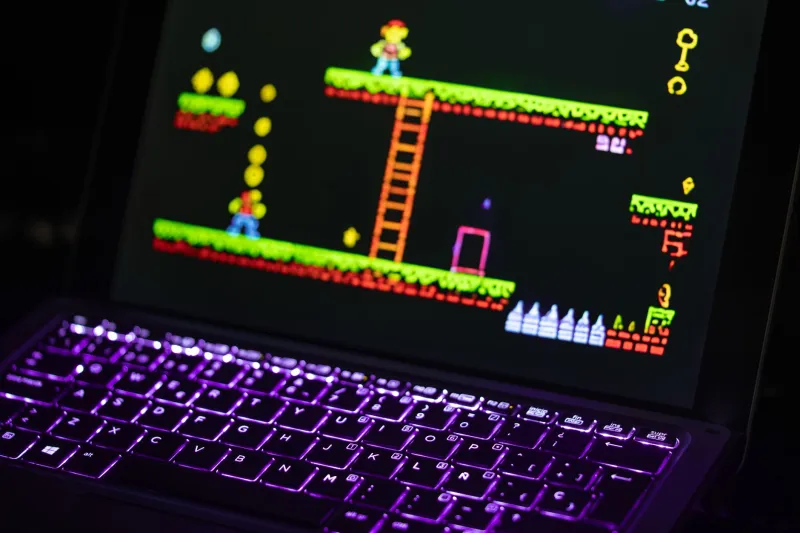
Let's start with a number: Stardew Valley has sold over 30 million copies. It was made by one guy. One. His name is Eric Barone, he goes by ConcernedApe, and he spent four years building a farming sim in his spare bedroom that went on to outsell titles from studios with hundreds of employees and marketing budgets the size of small countries.
That's not a fluke. That's a pattern — and it's reshaping what the gaming industry looks like from the inside out.
The AAA Formula Is Showing Its Age
For most of the 2000s and early 2010s, the path was pretty clear: bigger budgets meant better games. More developers, more realistic graphics, more content, more everything. And for a while, that worked. Franchises like Call of Duty, Assassin's Creed, and FIFA printed money by scaling up year over year.
But somewhere along the way, the formula started cracking. Live-service models turned games into subscriptions nobody asked for. Season passes sliced content out of finished products and sold it back in pieces. Launch-day patches became so common that "day-one updates" stopped being news. And players started noticing that behind all the gorgeous visuals and celebrity voice acting, a lot of AAA games were... kind of hollow.
The games were bigger. They weren't necessarily better.
Enter the Pixel Art Renaissance
While the big studios were busy optimizing their monetization funnels, something quietly beautiful was happening in basements and home offices across the country. Small teams — sometimes solo developers — were making games that looked like they came from 1994 and felt like nothing you'd ever played before.
Celeste took a retro platformer aesthetic and wrapped it around one of the most emotionally honest stories in gaming — a game about anxiety and self-doubt that hit harder than any cinematic blockbuster. Hollow Knight built a sprawling, atmospheric world on a budget that wouldn't cover a week of AAA marketing. Undertale sold millions of copies and became a cultural phenomenon, and it was made by one developer working alone.
The pixel art wasn't just aesthetic nostalgia. It was a statement. These games were saying: we don't need your budget. We have ideas.
Why Retro Aesthetics Are Resonating Right Now
There's a generational thing happening here that's worth unpacking. A lot of today's players — millennials especially, but Gen Z too — grew up with games that had constraints. Limited graphics meant developers had to be clever. Limited storage meant stories had to be tight. Those constraints produced games that were, in a weird way, more focused.
When you play a modern pixel art indie, you're not just getting nostalgia — you're getting design philosophy that prioritizes feel over flash. The controls are tight. The mechanics are intentional. Nothing is in the game by accident because nobody had the budget to add things by accident.
Compare that to a 60-hour open-world game padded with repetitive side quests and collectibles nobody asked for. The indie game respects your time in a way that a lot of big-budget releases simply don't.
The Price Point Isn't Nothing
Let's be real about economics for a second. A lot of indie games cost $15 to $25. Some are even cheaper on sale, which happens constantly on Steam. Meanwhile, a new AAA release is $70 — and that's before you factor in the deluxe edition, the battle pass, and the expansion pack.
For a casual gamer on a budget, the math is pretty simple. You can buy one big-budget game and hope it's good, or you can spend the same money on four or five indie titles with proven track records and passionate communities. The risk calculation has shifted dramatically.
Steam's discovery algorithm, the Nintendo eShop, and Xbox Game Pass have all made it easier than ever for small games to find big audiences. The old gatekeeping — where shelf space at GameStop basically determined what got played — is gone. A great game made in someone's garage can reach millions of players if the word of mouth is right.
The Developers Making It Happen
The indie scene in 2024 is genuinely diverse in a way the AAA space still isn't. You've got solo developers, two-person partnerships, small studios built from the ground up by people who left bigger companies because they wanted to actually make something.
Teams like Motion Twin (Dead Cells), Extremely OK Games (Celeste), and Team Cherry (Hollow Knight) have become household names in gaming circles — not because of marketing campaigns, but because their games were so good that players couldn't stop talking about them. That's the old-fashioned kind of success, and it feels refreshing.
And the tools have never been better. Engines like Unity and Godot have democratized game development to a degree that would have seemed impossible 20 years ago. You genuinely don't need a massive team to make a compelling game anymore. You need a good idea, the discipline to execute it, and a community willing to give it a shot.
What This Means for the Industry
The big studios aren't going anywhere — a new Grand Theft Auto is still going to sell 20 million copies on launch day, and nobody's pretending otherwise. But the indie revolution has permanently changed the conversation about what a "successful" game looks like.
It's proven that players will show up for emotional storytelling over spectacle. That mechanics matter more than graphics. That a game made with genuine passion can compete commercially with products made by armies of developers and armies of marketers.
For players, that's just great news. More options, more creativity, more games that feel like they were made by people who actually love games — not just people who love quarterly earnings reports.
So next time you're scrolling through your library, unsure whether to drop $70 on the next big thing, maybe take a detour. Find something small. Find something weird. Find something made by someone who had to care because they couldn't afford not to.
There's a good chance it'll be the best thing you play this year.