Boss Battle Cardio: The Unexpected Reason Gamers Are Dominating the Gym

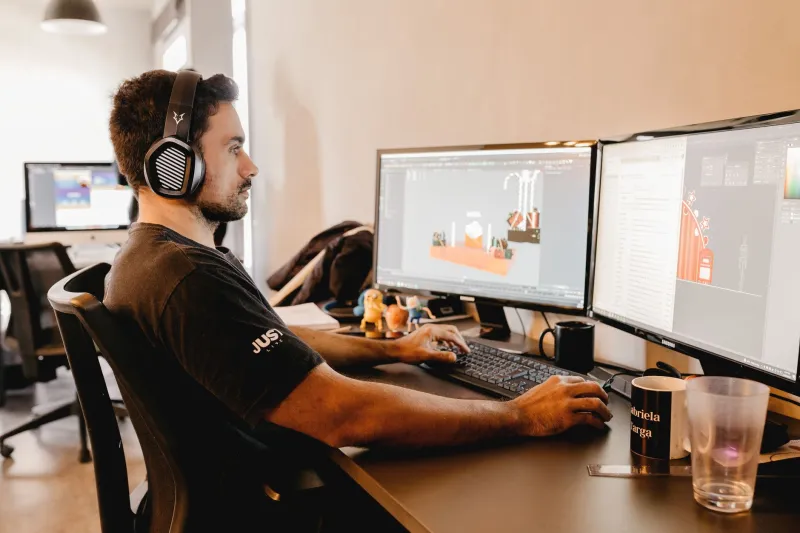
Photo by Photo by Vitaly Gariev on Unsplash on Unsplash
Somewhere between mile two and mile three, when your legs are arguing with your lungs and everything in your body is voting to stop, the brass section kicks in. It's not a pump-up anthem you've heard a thousand times. It's the Nier: Automata battle theme, and suddenly you're not a tired person on a treadmill anymore. You're a combat android fighting for the survival of humanity, and stopping is simply not an option.
This is not a niche experience. Across gyms, running trails, and cycling apps from Los Angeles to Chicago, a quiet revolution is happening in workout playlists. Video game soundtracks — once the domain of headphone-wearing teenagers in dark bedrooms — are becoming the go-to audio fuel for serious fitness enthusiasts. And the reasons why go a lot deeper than novelty.
Why Game Music Hits Different During a Workout
To understand why gaming soundtracks are uniquely effective as workout music, you have to understand what they were designed to do in the first place.
Video game composers don't write music to be listened to passively. They write music to sustain engagement over extended periods, to escalate tension at exactly the right moments, and to make repetitive actions feel meaningful. If that sounds like a description of a good workout playlist, that's not a coincidence — it's almost the exact same psychological brief.
Boss battle themes are engineered to signal that something important is happening right now and that you need to perform at your peak. Exploration tracks are built to make forward movement feel rewarding and purposeful. Ambient scores create a sustained emotional state that keeps you locked in without overwhelming your focus. Each of these serves a different workout moment, and gamers who've spent hundreds of hours responding to these cues emotionally are already primed to respond to them physically.
There's actual cognitive science behind this. The concept of "enclothed cognition" — the idea that what you wear affects how you perform — has a sonic equivalent. Music doesn't just accompany your state of mind; it actively shapes it. Game soundtracks, because they're so closely associated with high-stakes moments and triumph, can trigger something close to a performance mindset in people who have deep emotional connections to the games they came from.
The Streaming Numbers Don't Lie
This isn't just anecdotal. Spotify's gaming playlist category has seen consistent year-over-year growth, with "video game workout" and "gaming cardio" playlists accumulating millions of streams. YouTube channels dedicated to game OST compilations specifically marketed toward studying and exercise have built subscriber bases in the hundreds of thousands, with comment sections full of people describing their gym PRs.
Tracks from games like Doom Eternal, Monster Hunter: World, Celeste, and the Dark Souls series consistently appear in user-generated workout playlists shared across Reddit's r/fitness and r/running communities. The crossover isn't a fluke — it's a documented behavioral trend that fitness culture is only now starting to take seriously.
Apple Fitness+ and Peloton haven't fully embraced gaming soundtracks yet, but the user demand is visible in community forums and instructor shoutouts. It feels like a matter of time before one of the major fitness platforms does a formal video game music collaboration, and when that happens, the crossover will be impossible to ignore.
The Composers Who Knew All Along
Ask a video game composer whether they're surprised their work is showing up in gym playlists, and you'll often get a knowing smile rather than genuine shock. The composers behind some of gaming's most iconic scores — from Mick Gordon's relentless metal architecture in Doom to Yasunori Mitsuda's sweeping orchestral work in Xenogears — were always writing music designed to sustain and elevate human performance.
The difference between a boss battle theme and a traditional workout track is largely aesthetic, not functional. Both are trying to convince your body that the effort is worth it. Game composers just have a different toolkit — leitmotifs, dynamic layering, tempo escalation tied to narrative stakes — and for a lot of people, that toolkit turns out to be more effective.
Some composers have started acknowledging this directly. The Celeste soundtrack, composed by Lena Raine, has developed a cult following among long-distance runners specifically because of how it modulates between anxious energy and hard-won calm — a perfect emotional arc for a long run. Raine has spoken publicly about the emotional precision that goes into game scoring, and it's that precision that makes the music transfer so naturally to physical contexts.
Building Your Gaming Workout Stack
If you're curious about making the switch, the good news is that the options are almost overwhelming. Here's a rough framework for matching game soundtracks to workout phases:
Warm-Up: Ambient exploration tracks work beautifully here. Think the open-world themes from Breath of the Wild or the quieter passages from Journey. You want something that gets you moving without spiking your heart rate before you're ready.
Main Set / High Intensity: This is boss battle territory. Doom Eternal, Monster Hunter: World's hunt themes, the Nier: Automata combat suite, Persona 5's battle music. High tempo, high stakes, zero chill.
Steady-State Cardio: Running or cycling at a sustained pace pairs well with mid-energy adventure scores. The Halo trilogy's main themes, Final Fantasy XIV's field music, or the Horizon Zero Dawn soundtrack all work well here — driving enough to keep you moving, melodic enough to stay out of your head.
Cool-Down: Come back down with something like the Celeste B-side tracks, the To the Moon score, or the quieter passages from Ori and the Blind Forest. Your nervous system will thank you.
From the Controller to the Gym Floor
There's something poetic about this crossover that feels very on-brand for where gaming culture is right now. Games have spent decades proving that they're more than entertainment — they're emotional experiences, cognitive workouts, and increasingly, the shared cultural language of a generation. The fact that the music from those experiences is now helping people run faster and lift heavier is just another extension of gaming's reach into everyday life.
For the Play Henry community, this trend is worth paying attention to not just as a fitness tip but as a reminder of how much depth exists in gaming culture. The soundtracks you've been absorbing for years aren't just background noise. They're part of how you understand momentum, stakes, and perseverance.
Next time you're dreading a long run or a hard workout, load up a boss battle playlist and see what happens. Odds are, you'll finish stronger than you expected — and you'll have your favorite game to thank for it.