Ditch What You Know: The Case for Cheating on Your Favorite Gaming Setup
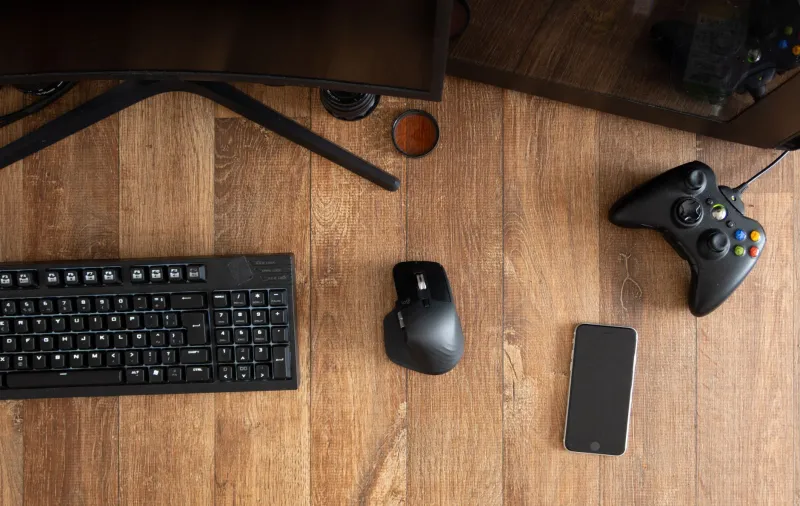
There's a controller sitting somewhere in your home — or a mouse, or a keyboard, or maybe a handheld you've owned since middle school — that you will defend with your whole chest. You know its weight. You know exactly how much pressure the triggers need. You could navigate a menu blindfolded. That setup is yours, and you are loyal to it in a way that would make a golden retriever jealous.
Here's the uncomfortable truth, though: that loyalty might be quietly capping your potential.
Before you close the tab, hear us out. This isn't a hot take designed to make you throw your Xbox controller into a lake. It's actually about something more interesting — the psychology of gaming comfort zones, and what happens when you deliberately break out of them.
Why We Cling to Our Setups Like a Security Blanket
Humans are creatures of habit, and gamers are no exception. When you first learned to play on a specific platform or peripheral, your brain built a whole network of muscle memory around it. Every button press, every mouse flick, every analog stick adjustment became automatic. That's genuinely useful — it's how you get good at games in the first place.
But here's the catch: that same automaticity can make you rigid. Researchers who study motor learning call it "contextual interference" — basically, practicing in only one specific context makes you really good in that context and kind of lost everywhere else. Gamers experience this all the time, even if they don't have a name for it. The PC player who picks up a controller at a friend's house and suddenly can't aim. The console die-hard who sits down at a mouse and keyboard and feels like they're learning to walk again.
The comfort zone isn't a plateau. It's more like a groove that gets deeper the longer you stay in it.
Real Players, Real Switches
We talked to a handful of gamers across the US who made deliberate decisions to experiment with unfamiliar setups — and what they found surprised even them.
Marcus, a 29-year-old from Atlanta who grew up playing everything on PlayStation, decided to try PC gaming after years of dismissing it as "too complicated." He spent the first two weeks feeling completely lost. "My aim was embarrassing," he admits. "I kept overshooting everything. I almost gave up after day three." But around week three, something clicked. Not just with mouse-and-keyboard, but with his overall spatial awareness in games. "I started noticing angles differently. When I went back to my PS5, I was actually better at reading enemy positions. It was weird."
Then there's Priya, a 24-year-old casual gamer from Chicago who primarily plays cozy games on Nintendo Switch. A friend convinced her to try a fighting game tournament using an arcade stick — a peripheral she'd never touched before. "I felt ridiculous at first. Everyone around me seemed so natural with it." After a month of messing around with the stick at home, she didn't just get better at the fighting game. She noticed her reaction times felt sharper across everything she played. "It's like my hands learned to be more deliberate."
These aren't isolated stories. They reflect something real about how varied practice builds more adaptable, well-rounded players.
The Brain Science Behind the Breakup
Sports science has known for a while that athletes who cross-train — swimmers who run, basketball players who do yoga — tend to develop better overall athleticism than those who only drill their primary sport. Gaming works similarly.
When you force your brain to relearn familiar actions through an unfamiliar input method, you're not just building new muscle memory. You're strengthening your underlying cognitive flexibility — the ability to adapt strategies, recalibrate expectations, and problem-solve under pressure. Those skills transfer. A PC player who spends a month seriously playing on a controller doesn't just become okay at controller gaming. They often come back to their mouse with a deeper understanding of aiming mechanics, because they had to think consciously about something they previously did on autopilot.
It's the gaming equivalent of learning to write with your non-dominant hand. Uncomfortable, humbling, and genuinely good for your brain.
How to Make the Switch Without Losing Your Mind
The biggest mistake people make when experimenting with a new setup is expecting immediate competence. You won't have it. That's not a personal failing — it's just how learning works. Here's how to make the experiment actually stick.
Start with low-stakes games. Don't try to learn mouse and keyboard in a ranked competitive shooter. Pick something slower, something where dying doesn't sting as much. Exploration games, turn-based RPGs, and single-player adventures are great testing grounds for new peripherals.
Give it at least three weeks. The first week will feel awful. The second week will feel slightly less awful. By week three, your brain starts to integrate the new input patterns and things begin to feel natural. Most people quit during week one. Don't be most people.
Keep a casual log. You don't need a spreadsheet. Even just a few notes on your phone — "felt clumsy today but landed more shots than yesterday" — help you track real progress instead of relying on how frustrated you feel in the moment.
Go back to your original setup intentionally. After a few weeks on the new setup, return to your usual gear with fresh eyes. Pay attention to what feels different. A lot of players report noticing things they'd never consciously registered before — the weight of their controller, the sensitivity of their mouse wheel, small habits they'd developed that weren't actually helping them.
Find a community doing the same thing. Plenty of gaming forums and Discord servers exist specifically for people learning new platforms or peripherals. The Play Henry community is full of players who've made these kinds of switches and are happy to swap tips. You don't have to suffer through the learning curve alone.
The Bigger Picture
Look, nobody is saying you need to abandon the setup that makes you happy. If your current rig brings you joy and you're playing exactly the kinds of games you love, there's nothing wrong with staying put. Gaming is supposed to be fun, full stop.
But if you've ever felt stuck — like your skills have plateaued, like you're going through the motions, like the games you love aren't hitting quite the same way — trying a new input method might shake something loose. Not because your old setup was bad, but because your brain needed a new challenge to grow.
The best gamers aren't just good at one game on one platform with one controller. They're adaptable. They understand their inputs deeply enough to use any of them effectively. And a lot of them got there by being willing, at some point, to feel like a total beginner again.
Your comfort zone will still be there when you get back. It'll just feel a little more like a choice and a little less like a cage.