Side by Side: How Couch Co-op Is Bringing the Fun Back Into the Same Room
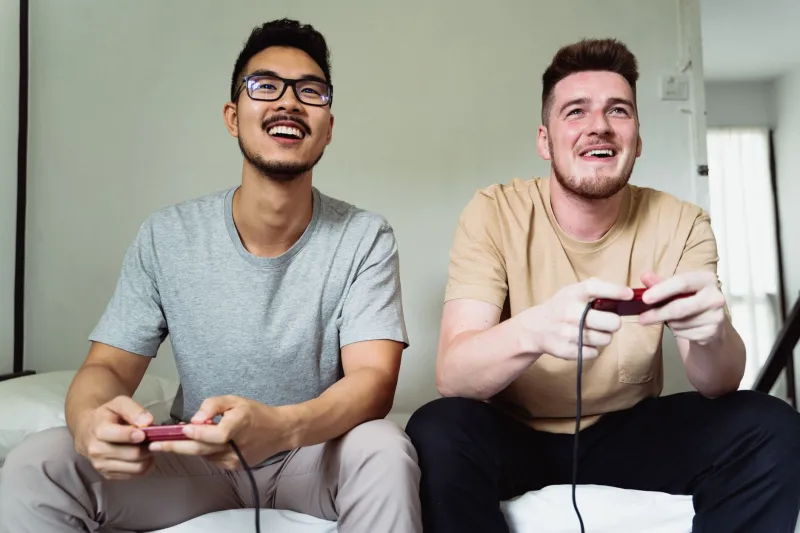
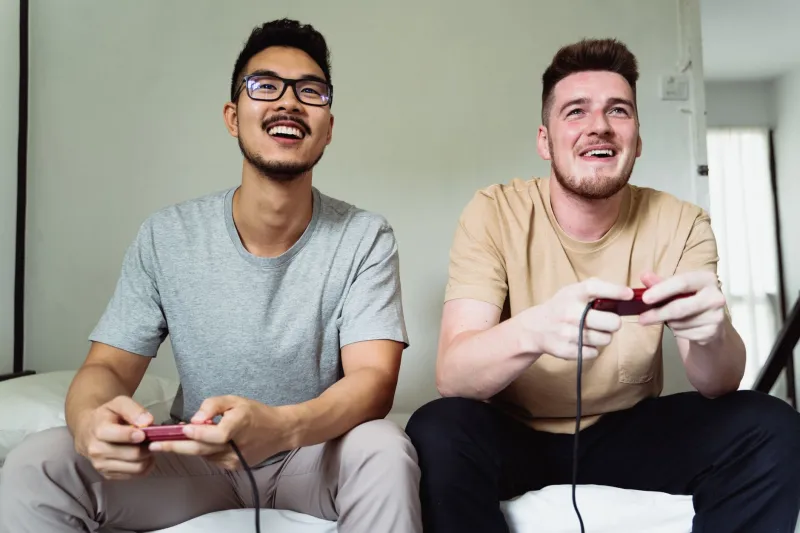
There's a specific kind of chaos that only happens when two people are sharing a screen, arguing over who grabbed the last health pack, and laughing too hard to actually finish the level. It's loud, it's messy, and honestly? It's kind of everything.
After years of online multiplayer dominating the conversation — headsets, Discord servers, ranked matchmaking — something unexpected has been happening in American living rooms. People are sliding back together on the couch. Couch co-op, the format that many assumed was a relic of the GameCube era, is having a full-blown moment. And the reasons why say a lot about where gaming culture — and frankly, people — are right now.
The Loneliness Loop Nobody Talked About
Here's the thing about online multiplayer: it's technically social, but it doesn't always feel that way. You're gaming with people, sure. But you're also alone in your room, staring at a screen, communicating through a mic that cuts out half the time. For a lot of players, especially post-pandemic, that distinction started to matter more.
Research out of the American Psychological Association has consistently flagged loneliness as a growing issue among adults under 40 — the exact demographic that makes up a huge chunk of the gaming population. And while games have always offered an escape, solo or even online play doesn't scratch the same itch as genuine physical presence.
Couch co-op changes that equation. When your friend is literally sitting next to you, bumping your arm when they get excited and stealing your snacks during cutscenes, you're not just playing a game together — you're hanging out. That distinction sounds small until you realize how rarely it actually happens anymore.
Developers Are Paying Attention
The people making games noticed the shift. Studios that had been laser-focused on online infrastructure started revisiting local multiplayer not as a legacy feature, but as a genuine selling point.
Take It Takes Two, the 2021 hit from Hazelight Studios that went on to win Game of the Year at The Game Awards. It was designed from the ground up as a couch co-op experience, and it became one of the most talked-about games of its era. Director Josef Fares didn't just include local play — he built the entire emotional arc of the game around two people sharing the same space, making decisions together in real time.
That success sent a message. Other developers followed. By 2024, titles like Teenage Mutant Ninja Turtles: Shredder's Revenge, Cuphead: The Delicious Last Course, and Untitled Goose Game had already proven that couch-friendly games could move serious units. The pipeline for local multiplayer titles has only grown since.
Indie developers, in particular, have leaned hard into this space. Smaller studios often can't compete with the massive server infrastructure that online-heavy AAA games require, but they can build tight, inventive experiences designed for two or four players on the same couch. The result has been some of the most creative multiplayer design in years.
What Makes Couch Co-op Different (Psychologically Speaking)
Beyond the vibe, there's actual science backing up why in-person gaming hits differently. Shared physical experiences — being in the same room, reacting to the same stimuli simultaneously — trigger what psychologists call "social presence," a sense of genuine connection that digital-only interaction often struggles to replicate.
When you're playing online, you're mediating every emotion through technology. When you're on the couch, your friend sees your face when the jump scare hits. You both groan at the same moment when you fail the puzzle for the fifth time. Those micro-moments of shared reaction are what bond people, and couch co-op is basically a machine for generating them.
For families, this is especially significant. Parents who game with their kids report that local multiplayer creates some of their most memorable bonding moments — not because the game is educational, but because they're present together in a way that parallel screen time doesn't allow.
The 2024 Couch Co-op Lineup Worth Your Couch Time
Whether you're gaming with a partner, a sibling, or a friend who swears they're "not really into games," there's a couch co-op title in 2024 that fits your situation. Here's a quick breakdown:
For total beginners and mixed-skill groups:
- Overcooked! All You Can Eat — chaotic kitchen gameplay that's easy to pick up and impossible not to laugh at
- Stardew Valley (co-op update) — chill, low-pressure farming that's perfect for longer hang sessions
For competitive friends who like to talk trash:
- Nidhogg 2 — two-player sword fighting that's fast, silly, and surprisingly deep
- Towerfall Ascension — archery battles that will absolutely destroy friendships in the best way
For players who want a real challenge:
- Cuphead — brutally hard run-and-gun action with gorgeous 1930s animation; you will die, a lot, together
- Hades II (early access) — roguelite dungeon crawling with tight mechanics and serious replay value
For something completely different:
- Untitled Goose Game — two geese, one village, endless chaos. Just trust us.
- We Were Here Forever — a puzzle-adventure that requires actual communication to solve, making it great for people who actually like talking to each other
Pass the Controller, Not the Headset
There's a reason "pass the controller" became a phrase in the first place. Gaming has always had a communal instinct baked into it — arcades were social spaces, living room setups were gathering points, and the couch was where friendships got tested and cemented simultaneously.
Online play didn't kill that instinct. It just temporarily redirected it. What the couch co-op renaissance suggests is that players — across age groups, across skill levels — are finding their way back to what made gaming feel like more than a solo activity.
At Play Henry, we've always believed that the best gaming moments are the ones you end up retelling. The impossible boss fight you barely survived. The level you finally cracked at 1 a.m. The friend who rage-quit and then immediately asked for one more round.
Those stories don't come from ranked lobbies. They come from couches.
So if your setup has been a solo operation lately, maybe it's time to clear some space. Invite someone over. Split the screen. See what happens when gaming goes back to being something you do with people instead of just near them.
Your couch has been waiting.