More Than a Respawn: The Real Fight to Make Gaming a Place Everyone Actually Belongs
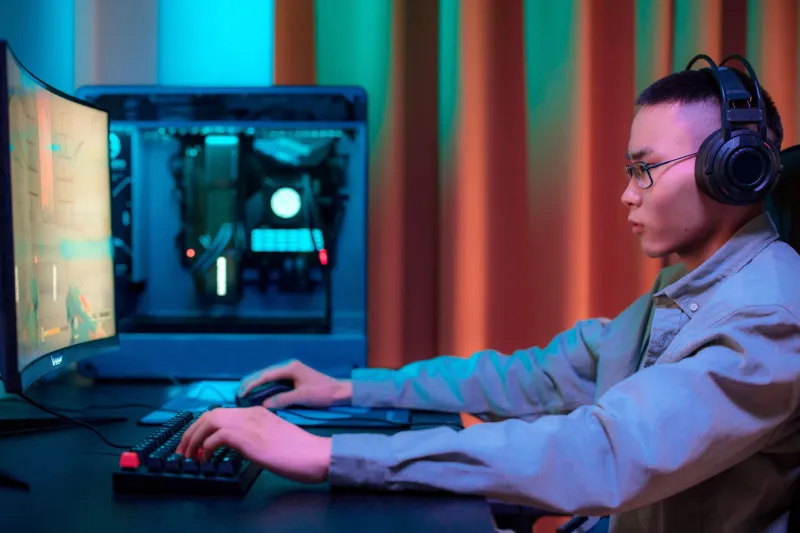
If you've spent any real time in online gaming spaces, you already know the script. The slurs in voice chat. The assumption that a woman's voice means she's either a girlfriend or lying about her skill level. The dismissiveness toward anyone who doesn't fit the dominant image of what a "real gamer" is supposed to look like.
And if you're someone who that script has been used against — you know the exhaustion of it. The mental math of deciding whether to use a mic. The clan names and avatar choices designed to obscure gender. The constant low-level calculation of whether this lobby is safe enough to just play.
Gaming's toxicity problem isn't new. But the conversation around fixing it has gotten louder, messier, and — in some genuinely important ways — more honest. Here's where things actually stand.
The Scope of the Problem
Let's not bury the numbers. A 2023 survey from the Anti-Defamation League found that more than half of online multiplayer players in the US reported experiencing harassment. Women, LGBTQ+ players, and players of color reported significantly higher rates. The harassment isn't random noise — it follows patterns, targets specific identities, and in many cases is deliberate.
In esports specifically, the gap is stark. Women competing at elite levels in major titles remain a tiny fraction of the professional scene — not because the talent isn't there, but because the pathway is riddled with barriers that have nothing to do with skill. Harassment from teammates, dismissal from coaches, and an audience that sometimes treats female competitors as novelties rather than athletes all compound into a structural problem that individual grit can't fully overcome.
"I've been told I only got sponsored because of how I look," says one female streamer who asked to remain anonymous. "I've been playing competitively for eight years. I have the stats. And I still have to prove myself every single time in a way that my male teammates just don't."
Where Genuine Progress Is Happening
Here's the part that often gets lost in the doom and gloom: real change is happening. It's uneven, it's slower than it should be, and it's often hard-won — but it's real.
On the design side, a growing number of developers are building inclusion into games from the ground up rather than bolting it on as an afterthought. Character creators that allow for a wider range of body types, skin tones, and gender expressions. Default options that don't assume a male protagonist. Storylines that treat diverse characters as full human beings rather than sidekicks or stereotypes.
Baldur's Gate 3, released in 2023, became a massive commercial success while offering one of the most genuinely inclusive character creation systems in mainstream gaming history. Players didn't just tolerate it — they loved it. The game sold extraordinarily well, and the character creation suite became a talking point in its own right. The argument that "inclusion hurts sales" took another hit.
Community moderation has also improved — incrementally, but meaningfully. Platforms like Discord have developed more robust reporting tools. Games like Valorant have implemented machine learning systems to detect and act on voice chat harassment. These aren't perfect solutions, but they represent a genuine shift from the old "just mute them" shrug that platforms used to offer.
What Performative Progress Looks Like — and Why It Matters
Not all progress is equal, and players have gotten pretty good at spotting the difference.
The most common form of performative inclusion is what some call "cosmetic diversity" — slapping a rainbow flag on a loading screen for Pride Month while the actual community remains hostile to LGBTQ+ players, or adding a female character to a roster without addressing the harassment that female players face in-game. It's inclusion as marketing rather than inclusion as values.
"When a company tweets about Women in Gaming Month and then does nothing to address the harassment reports piling up in their support queue, players notice," says one community manager who works for a mid-sized studio and asked not to be named. "It's not a secret. It just makes people angrier."
The gaming community has a sharp nose for corporate insincerity, and that's actually useful here. The backlash against hollow gestures creates accountability pressure — not always productively, but often enough to matter. Studios that treat inclusion as a PR checkbox tend to hear about it.
The Backlash Is Real Too
It would be dishonest not to address this: the push for more inclusive gaming culture has generated significant backlash, some of it organized and some of it just loud. Online spaces have seen coordinated harassment campaigns targeting female developers and critics. Certain corners of gaming culture treat any acknowledgment of the toxicity problem as an attack on gaming itself.
This resistance is worth understanding rather than just dismissing. Some of it is bad-faith culture war noise. But some of it reflects a genuine anxiety from players who feel like the hobby they grew up with is being criticized wholesale — that loving games means being implicated in everything wrong with gaming culture.
That's a false choice, and the most effective advocates for change in gaming know it. The goal isn't to make existing players feel like villains. It's to make the space better for everyone — including the people who are already there.
What Individual Players Can Actually Do
This is where a lot of these conversations stall out — at the level of individual responsibility. And it's worth being honest that systemic problems need systemic solutions. One player calling out a slur in voice chat isn't going to fix structural sexism in esports.
But individual action isn't meaningless either.
Research consistently shows that bystander intervention — even something as simple as saying "hey, not cool" in a lobby — changes the social calculus for harassers. It signals that the behavior isn't normalized, that there's a social cost. Most people who engage in low-level harassment are testing social norms, not committed ideologues. Pushback works more often than you'd think.
Beyond that: support female streamers and content creators with your attention and subscriptions. Recommend games from studios with genuine track records on inclusion. Report harassment when you see it, even when it's not directed at you. These are small things, but small things add up.
The Longer Game
Gaming culture is genuinely in flux right now, and that's uncomfortable in both directions. The people pushing for change are frustrated by how slow it is. The people resistant to change are frustrated by how relentless the pressure feels. Neither side is going away.
What the community actually needs — and what the best voices in this conversation are pushing for — is less performance and more practice. Less corporate rainbow washing and more actual moderation infrastructure. Less dismissing harassment as "just the internet" and more treating it as a community standards issue with real consequences.
Gaming is one of the largest entertainment industries in the world. It shapes how people socialize, how they compete, how they tell stories. The culture it fosters matters — not just for the people it currently excludes, but for everyone who plays.
The controller has always been for everyone. The community around it is still catching up.